
 English
Views: 0 Author: Site Editor Publish Time: 2026-06-01 Origin: Site


Selecting the right materials for a new factory represents a critical capital expenditure. Today, steel frames dominate the industrial landscape. They account for nearly 95% of all low-rise industrial construction projects. Why? Factory owners and procurement teams face immense pressure. You must balance immediate construction budgets against long-term operational flexibility. Heavy load requirements demand robust engineering. Site-specific environmental risks complicate the planning phase even further. Finding the perfect structural balance is rarely easy. We must move beyond basic definitions to understand the engineering behind these assets. This guide explores exactly how specific frameworks solve complex payload, space, and timeline challenges. You will discover practical ways to evaluate the best framework for your next facility expansion. Whether you need massive clear spans or heavy crane integration, making an informed choice protects your investment.
Clearspan Capability: Portal frame structures allow for 50–100 meter column-free spans, maximizing internal footprint for production and logistics.
Engineered for Heavy Loads: Specific subsystems (e.g., crane girders, transfer beams) are designed to safely integrate 50+ ton overhead cranes and complex pipeline corridors.
TCO Advantages: Lighter superstructures reduce foundation costs by up to 30%, while prefabricated modularity enables assembly speeds of 300–500 square meters per day.
Verifiable Standards: High-yield steel (e.g., Q355B) and strict anti-corrosion treatments (Sa 2.5 shot blasting, 84µm zinc layers) are non-negotiable for 50-year structural integrity.
Modern factories are not just empty shells. They function as highly engineered mechanical systems. The framework must actively support your daily operations. We can identify specific use cases and the components required to support them.
Some facilities require intense material handling. Heavy manufacturing plants depend on dynamic load support. You cannot rely on standard commercial framing for these environments. Equipment like stamping presses or smelting machines generate severe vibration. Overhead cranes introduce multi-directional stress to the building frame.
Engineers solve this by integrating dedicated crane girders. They install massive transfer beams and reinforced columns. These elements absorb the heavy lifting stress. They manage the lateral forces generated by 50-ton overhead cranes. This isolation ensures the primary frame remains completely stable. It prevents catastrophic structural fatigue over time.
Common Mistake: Failing to account for dynamic crane loads during the initial design phase. This oversight often leads to expensive retrofitting. It can also cause premature cracking in the foundation.
Square footage utilization is the ultimate success metric for warehouses. Every interior column represents lost revenue. Columns obstruct forklift paths. They limit your pallet racking configurations. Logistics companies need vast, uninterrupted floor plans.
Clearspan designs solve this problem beautifully. They eliminate interior support columns entirely. An optimized Industrial Steel Structure provides massive open areas. You can easily adjust racking layouts as inventory changes. Forklifts navigate freely. This layout accelerates your daily material throughput.
Chemical plants and specialized power facilities present unique challenges. They feature extensive Mechanical, Electrical, and Plumbing (MEP) needs. These buildings require massive suspended lifelines. Pipe networks and technical ventilation systems add incredible weight to the ceiling.
Specialized frameworks handle these burdens easily. Engineers incorporate technical corridors directly into the roof trusses. They utilize pipe support grids to route hazardous materials safely. Composite steel-concrete floors are often used on mezzanines. They absorb mechanical vibrations and bear the massive weight of suspended utility lifelines.
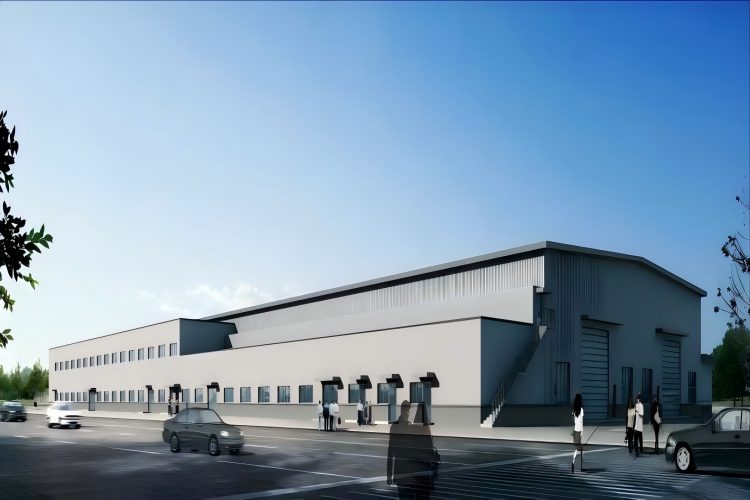
Choosing a framework dictates your operational future. We must break down the primary structural forms. You need to understand the business logic behind choosing each one.
The portal frame mechanism relies on a rigid skeleton. It utilizes high-strength steel to form a continuous load path. The design connects columns and rafters seamlessly.
This frame is best for most single-story factories. Warehouses utilize portal frames extensively. They provide highly cost-effective wide spans. You get maximum floor space for a minimal structural investment.
However, there is a distinct trade-off. Vertical expansion is structurally limited. If you plan to add multiple heavy floors later, a standard portal frame will struggle. You must reinforce it heavily, which destroys your initial cost savings.
Grid and truss systems utilize a different mechanism entirely. They are triangulated spatial structures. The intersecting geometric patterns distribute loads multi-directionally. This prevents any single point from bearing too much stress.
They are best for massive roof structures. Aviation hangars and giant logistics hubs use them. They offer extreme modularity. You can assemble vast sections simultaneously.
The trade-off involves precision. Prefabrication cuts construction time by 30-50 percent. Yet, it demands highly precise fabrication tolerances. Factories must maintain a ±2mm tolerance margin. Without this precision, seamless on-site bolting becomes impossible.
This mechanism uses traditional perpendicular framing. Vertical columns support horizontal beams. Builders often combine these frames with composite decking materials.
They are perfect for vertical manufacturing. They integrate easily with heavy equipment mezzanines. If your land footprint is severely limited, you must build upward. Beam and column frames make multi-story industrial facilities possible.
Framework Comparison Summary:
| Framework Type | Primary Mechanism | Best Application | Major Limitation |
|---|---|---|---|
| Portal Frame | Rigid 2D load path | Single-story warehouses | Poor vertical expansion |
| Grid and Truss | Multi-directional spatial load | Aviation, mega-roofs | Requires extreme precision |
| Beam and Column | Perpendicular support grid | Multi-story manufacturing | Interior columns consume space |
Astute procurement teams look far beyond the initial Bill of Materials (BOM). They analyze the broader financial impact. Structural choices ripple through the entire project budget.
First, consider foundation and site preparation savings. Structural steel boasts a superior strength-to-weight ratio compared to concrete. It requires much shallower foundations. You excavate less soil. You pour less concrete. This routinely cuts groundwork costs by up to 30 percent. Lighter superstructures inherently demand less subterranean support.
Next, evaluate labor and assembly velocity. Factory-prefabricated systems simply bolt together. They drastically reduce on-site labor hours. You do not wait for concrete to cure. Standardized projects achieve enclosure rates of 300–500 square meters per day. This speed translates into faster operational readiness. You start generating revenue months earlier.
Finally, factor in insurance and operational overhead. Steel is inherently non-combustible. It resists seismic tremors and high-wind events effectively. As a result, steel structures often qualify for significantly lower commercial property insurance premiums. Additionally, steel wall cavities are deep. They accommodate much thicker insulation profiles. This curbs long-term HVAC costs immensely.
Procurement teams must demand specific engineering metrics from vendors. You cannot accept vague material promises. Strict technical benchmarks ensure your factory survives its intended lifespan.
Material grades determine structural safety. You must demand verifiable high-strength structural steel. Acceptable standards include Q345B, Q355B, or ASTM A572 Gr50. These materials deliver a minimum yield strength of 355 MPa. They withstand extreme bending without permanent deformation.
Surface treatment dictates corrosion resistance. Industrial environments degrade inferior materials rapidly. Corrosive vapors and high humidity destroy raw steel. You must mandate strict surface preparation.
Abrasive Blasting: Require Sa 2.5 shot blasting standards. This cleans the metal to a near-white finish.
Primer Application: Specify zinc-rich epoxy primers immediately after blasting.
Galvanization: For harsh zones, demand hot-dip galvanization. It must yield at least a 600g/m² (84µm) zinc layer.
Manufacturing tolerances prevent on-site delays. If steel arrives slightly warped, assembly stops entirely. Fabrication tolerances must be strictly controlled at the factory level. The absolute industry standard is ±2mm for all primary load-bearing members. Do not accept wider margins.
Adoption carries distinct blind spots. You must understand the realities of lifecycle management. A well-designed Industrial Steel Structure requires active stewardship.
Pre-construction blind spots destroy budgets. The structural frame is only as good as the site preparation beneath it. Many buyers overlook basic environmental factors. They miscalculate soil bearing capacity. They ignore regional drainage patterns. They fail to check localized wind and snow load codes. These errors lead to catastrophic permitting delays and structural failures.
The reality of corrosion and fatigue cannot be ignored. Steel requires scheduled maintenance. It is not a "set and forget" asset. You must frame out a routine inspection schedule. Check all bolted connections and coatings every one to two years. High-vibration crane areas require Non-Destructive Testing (NDT). Ultrasonic testing detects hidden weld fatigue early. Plan for a comprehensive recoating cycle every five to ten years.
Future-proofing requires technology integration. The industry is shifting toward Digital Twin technology. This involves using digital 3D models synchronized with physical structures. It allows facility managers to predict maintenance needs accurately. You can simulate massive modular expansions digitally. This ensures you can scale up without interrupting existing factory operations.
Selecting the right engineering partner defines your project success. You need a rigorous decision framework. Do not settle for the cheapest local fabricator.
In-House Engineering vs. Pure Fabrication: Prioritize partners capable of conducting localized structural analysis. They must calculate your specific seismic, wind, and snow loads. A pure fabricator only builds off supplied drawings. They will not catch critical engineering flaws.
Supply Chain Transparency: Demand complete clarity on material origins. Where do they source their steel billets? Require comprehensive QA/QC documentation. They must provide in-house testing protocols, such as ultrasonic testing for all primary welds.
Turnkey Capabilities: Evaluate their overall supply capability. Can they supply the primary I-beams alongside the secondary framing? They should provide C/Z purlins, wall cladding, and insulated sandwich panels together. A unified, clash-free system prevents messy vendor disputes on site.
Best Practice: Always request a factory tour, either physical or virtual. Inspecting a vendor's robotic welding lines and shot-blasting chambers reveals their true quality control standards.
An industrial steel structure is never a commodity purchase. It is a highly engineered mechanical system designed to protect your manufacturing assets. Making the right choice requires careful evaluation of loads, spans, and environmental threats. By understanding the differences between portal frames, grid systems, and multi-story designs, you set your operations up for long-term success.
We advise buyers to prioritize upfront engineering precision. Material traceability always matters more than the lowest initial bid. Investing in verifiable steel grades and superior anti-corrosion coatings secures a reliable, 50-year asset. It eliminates the constant threat of operational downtime due to structural fatigue.
Take the next step toward your facility expansion today. Consult with qualified structural engineers to run a comprehensive load-bearing assessment. Request a preliminary material quote based purely on your specific operational floor plan and workflow requirements.
A: A standard pre-engineered 5,000 sqm facility typically takes 3–5 months from foundation to enclosure. Meanwhile, complex 10,000–20,000 sqm projects usually require 5–8 months depending on specific site conditions and weather constraints.
A: Yes. One of steel's primary advantages is modularity. If future expansion was accounted for in the initial foundation and frame design, new bays can easily be bolted onto the existing structure with minimal operational disruption.
A: Yes, provided the correct preventative measures are specified. For chemical or high-humidity manufacturing, high-grade epoxy coatings, hot-dip galvanization, and strict regular maintenance schedules mitigate corrosion risks effectively.
