
 English
Views: 0 Author: Site Editor Publish Time: 2026-06-08 Origin: Site


While bare structural steel is completely non-combustible, it begins losing vital integrity at elevated temperatures. In fact, unprotected steel retains only about 60% of its yield strength once it hits 1,000°F (537°C). In heavy industrial settings, rapid heat rise can quickly lead to catastrophic framework buckling. Protecting an Industrial Steel Structure requires moving beyond generic fire ratings. You must carefully match the specific fire threat, such as cellulose versus hydrocarbon fires, alongside the unique environmental exposure of your facility. Relying on basic commercial standards often leaves high-risk operations vulnerable. This guide provides facility managers, structural engineers, and contractors with a technical, decision-focused breakdown. We will explore passive fireproofing methodologies, installation realities, and critical compliance pitfalls. You will learn how to evaluate material tradeoffs and align protection strategies with your actual operational risks.
Threat dictates the solution: Standard commercial fireproofing (ASTM E119) fails under industrial hydrocarbon fire conditions (UL 1709), which can reach 2,000°F in under five minutes.
Material tradeoffs are absolute: Cementitious coatings offer cost-effective bulk but risk moisture trapping; intumescent coatings save space and weight but require strict environmental controls during application.
More is not always better: Exceeding manufacturer-specified coating thicknesses can cause delamination under self-weight, instantly voiding fire protection.
Application workflow matters: Off-site (shop) application of advanced coatings is increasingly replacing on-site spraying to accelerate project schedules and improve quality control.
You cannot properly protect a facility without understanding how fire behaves inside it. Fire dynamics change drastically depending on the fuel source. Structural failure in steel components rarely happens because the metal melts. Melting requires temperatures around 2,500°F (1,370°C). Instead, failure happens due to thermal deformation and load-bearing loss.
Engineers design fireproofing systems around a specific thermal buffering goal. We aim to keep the steel core below 1,000°F for as long as possible. Reaching this threshold strips away roughly half of the metal's structural capacity. Delaying this temperature spike buys critical time. It allows workers to evacuate safely. It also gives active fire suppression systems time to deploy.
Different facilities face different types of fires. Industry standards divide these threats into two distinct categories.
Cellulose Fires (ASTM E119 / UL 263): These fires feed on wood, paper, and typical building materials. They produce a slower heat curve. They take up to four hours to reach 2,000°F (1,093°C). This standard works well for light-industrial facilities, commercial offices, or general warehousing spaces.
Hydrocarbon Fires (UL 1709): These fires feed on highly flammable chemicals, combustible gases, and petrochemicals. They feature an extreme, aggressive heat curve. Temperatures can spike to 2,000°F in just five minutes. Protection against hydrocarbon fires is absolutely mandatory for petrochemical plants, oil refineries, and high-risk manufacturing sites.
| Fire Type | Primary Fuel Source | Test Standard | Time to Reach 2,000°F | Typical Application |
|---|---|---|---|---|
| Cellulose | Wood, paper, plastics | ASTM E119 / UL 263 | ~ 4 Hours | Warehousing, Light Industrial |
| Hydrocarbon | Oil, gas, petrochemicals | UL 1709 | ~ 5 Minutes | Refineries, Chemical Plants |
Common Mistake: Do not assume an ASTM E119 certification will protect a chemical plant. Applying cellulose-rated materials in a hydrocarbon environment guarantees catastrophic failure during a real emergency.
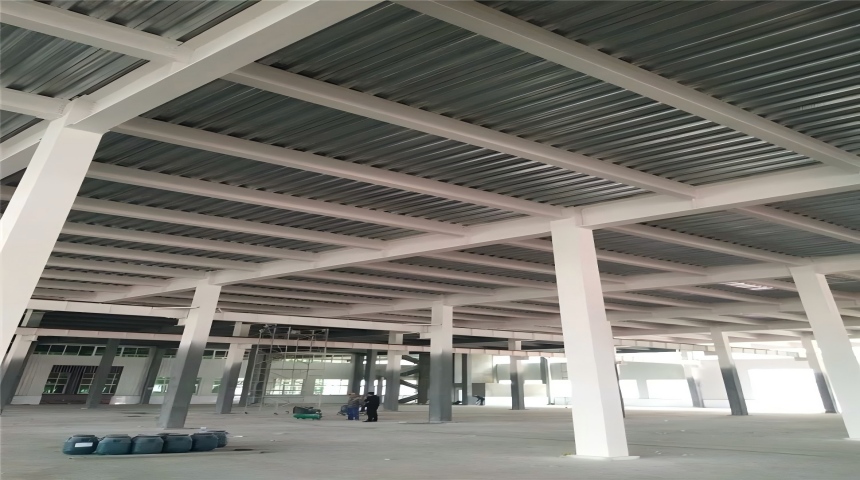
Choosing the right passive fire protection involves weighing material properties against environmental conditions. The market provides four primary categories of protection. Each offers distinct mechanisms, advantages, and limitations.
Cementitious coatings form a thick, physical thermal barrier. They rely on their inherent mass and fire resistance to absorb and block heat. Contractors apply them using wet-spray or dry-spray techniques.
Pros: This material carries a very low upfront cost. It provides highly reliable protection for concealed spaces. It works well for facilities possessing massive steel footprints.
Cons: SFRM adds heavy dead weight to the framework. The material has a large carbon footprint. It is prone to physical damage and freeze-thaw degradation. Most critically, it easily traps moisture against the steel. This trapped moisture often causes severe Corrosion Under Insulation (CUI).
Intumescent materials look like thick paint but act as complex chemical shields. They are thin-film coatings. When exposed to extreme heat, they undergo a rapid chemical reaction. They expand into a thick, carbonaceous char. This charred foam heavily insulates the underlying steel.
Pros: IFRMs are incredibly lightweight. They require a minimal spatial footprint. They allow facilities to feature Architecturally Exposed Structural Steel (AESS) safely.
Cons: They carry a much higher upfront material cost. Installers must maintain strict control over ambient temperature and humidity during application.
Rigid board systems use pre-manufactured panels. Manufacturers typically make them from high-density mineral wool or calcium silicate. Installers mechanically fasten these boards directly to the steel beams and columns.
Pros: Contractors can install them alongside steel erection in an "install as you go" workflow. They are immediately weather-resistant upon installation. They also provide excellent acoustic buffering and moisture barriers.
Cons: Installation is highly labor-intensive. Fitting rigid boards around complex joints, cross-bracing, or non-traditional structural shapes requires tedious custom cutting.
These two methods serve highly specialized niche applications within an industrial environment.
Flexible Blanket Systems: These endothermic wraps absorb heat efficiently. They are non-toxic and removable. We use them for complex pipe racks or areas requiring frequent inspection.
Concrete Encasement: Contractors pour traditional Portland concrete around steel columns. Concrete handles highly abusive environments perfectly. We reserve it for the base of structural columns where heavy machinery might cause impact damage. It adds massive dead weight, so engineers use it sparingly.
| Protection Type | Primary Mechanism | Best Use Case | Major Vulnerability |
|---|---|---|---|
| SFRM (Cementitious) | Physical thermal barrier | Concealed indoor steel | Moisture trapping (CUI) |
| IFRM (Intumescent) | Chemical char expansion | Exposed architectural steel | Strict application climate |
| Rigid Board | Pre-manufactured insulation | Fast-track construction | Complex joint fitting |
| Concrete Encasement | Mass encasement | High-impact base columns | Excessive dead weight |
Intumescent Fire-Resistive Materials (IFRMs) represent the fastest-growing industrial solution today. However, treating all IFRMs equally is a dangerous mistake. Specifying the correct chemical formulation is critical. You must match the coating chemistry to the exact environment.
Water-based intumescent coatings utilize water as their primary solvent. They cure through water evaporation.
Best for: Interior, environmentally controlled zones. They are mandatory where local regulations enforce strict Volatile Organic Compound (VOC) limits.
Limitations: You cannot expose them to high humidity or weather during the curing phase. Moisture will ruin the chemical composition before it fully sets.
Solvent-based coatings cure through the evaporation of chemical solvents. They offer a much more robust curing profile.
Best for: Exterior applications and cold-weather construction projects.
Operational Advantage: Advanced formulations allow for high single-coat wet-film thickness. Installers can spray up to 160 mils in one pass. This drastically reduces the total number of spray passes needed. It cuts contractor labor time significantly. Furthermore, these coatings can withstand sudden rain within mere hours of application.
Epoxy intumescents form a highly durable, dual-component matrix. They are the strongest class of thin-film protection.
Best for: Heavy industrial sectors, transit subways, and offshore facilities. They offer extreme abrasion and aggressive chemical resistance.
Operational Advantage: Epoxy is the premier choice for off-site prefabrication. Contractors can apply it via shop spraying before transportation. The steel arrives on-site fully protected. This completely eliminates costly weather delays during construction.
Even the best materials fail if installed incorrectly. Standard building codes strictly regulate how we apply these coatings. Engineering and contractor errors frequently void UL listings. This compromises safety and exposes facility owners to massive liability.
Many contractors mistakenly believe that adding extra coating layers increases safety margins. Applying intumescent coatings beyond their UL-certified maximum thickness creates a deadly hazard. When the coating expands into a protective char during a fire, it becomes heavy. If the underlying unexpanded layer is too thick, the entire foam mass cannot support its own weight. It cracks and peels off in large chunks. This process is called delamination. Once delamination occurs, the bare steel is instantly exposed to the fire.
You cannot use a one-size-fits-all approach for steel beams. Coating specifications rely on exact mathematical calculations based on the mass of the steel member. Engineers use the W/D ratio (or Section Factor) to determine coating thickness. A thick, heavy structural column heats up slower than a thin roof joist. Therefore, a heavy coating thickness verified for a massive column cannot be safely extrapolated. Applying that same thickness to a lightweight joist may cause the coating to detach under heat stress. Protecting an Industrial Steel Structure demands a member-by-member calculation.
Facility owners often want to paint their exposed structural steel for branding or aesthetic reasons. Adding unapproved decorative topcoats over an intumescent layer is a serious compliance failure. Many standard industrial paints physically suppress the intumescent foaming process. Some chemicals in topcoats interact negatively and change the flammability rating of the system. You must strictly verify specified topcoats against the underlying IFRM data sheet. Only use manufacturer-approved, rigorously tested topcoat pairings.
Best Practice: Always request a comprehensive compatibility letter from the IFRM manufacturer before applying any aesthetic topcoat over the fireproofing system.
Selecting the optimal fireproofing system is a multi-dimensional engineering decision. You must look past upfront material costs and evaluate the practical realities of your specific construction project.
Before reviewing any product data sheets, you must classify your facility's environmental exposure. The Underwriters Laboratories (UL) categorize environments meticulously. For example, UL Category I-A designates a harsh outdoor heavy industrial environment. These areas face rain, freeze-thaw cycles, and chemical runoff. In contrast, UL Category II-A designates an indoor conditioned space. Selecting an indoor-rated water-based IFRM for a Category I-A exterior environment guarantees premature failure. Always secure the environmental rating first, then filter your product options accordingly.
Time is a critical resource in industrial construction. Your site location and timeline deeply influence material selection. If your construction site faces severe weather constraints, field-sprayed materials become a liability. Rain and high humidity will halt SFRM or water-based intumescent spraying for weeks. In restricted scenarios, you should prioritize rigid boards. Installers can attach them as they go, regardless of rain. Alternatively, choose epoxy IFRMs applied off-site. Prefabricated coating ensures your timeline remains perfectly intact, shielding your schedule from unpredictable weather delays.
Protecting your heavy industrial framework goes far beyond achieving a basic compliance checkbox. It requires aligning the specific fire curve (hydrocarbon versus cellulose) with the physical environment and the overarching construction schedule. Failing to account for moisture entrapment, precise W/D ratios, or topcoat compatibility can instantly void your protection when a fire actually breaks out.
Your next steps must prioritize precision. We highly recommend that project stakeholders consult directly with certified structural fire protection engineers. Have them perform a thorough W/D ratio analysis for every beam and column. You must establish a compliant, scalable specification before entering the procurement phase. Taking these proactive steps ensures your facility remains secure, compliant, and resilient against extreme thermal threats.
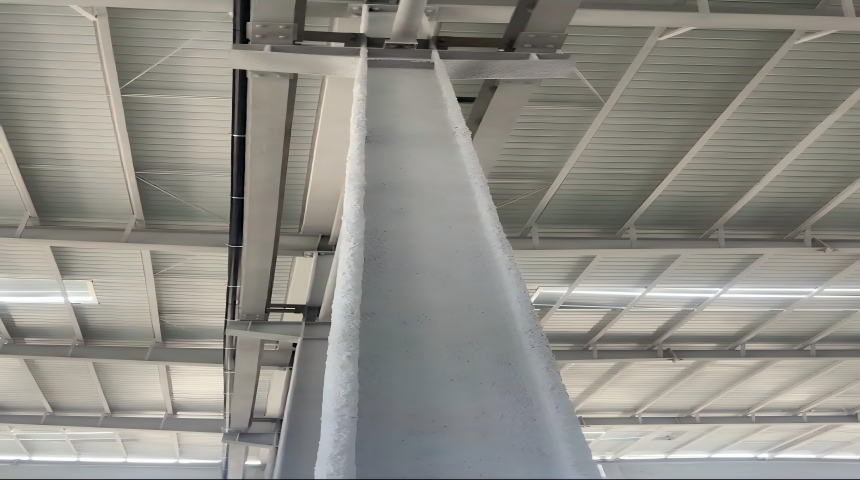
A: Active systems, like sprinklers and water mist, require a trigger and mechanical action to extinguish flames. Passive systems, including coatings and rigid boards, are built directly into the structure. They thermally buffer the steel to prevent collapse and require no mechanical activation or water supply to function.
A: No. Standard practice and code compliance require complete removal of the existing SFRM down to bare, properly primed steel. Intumescent coatings require specific substrate adhesion to function and expand correctly. Applying them over old cementitious material will cause complete system failure.
A: When specified correctly for the environmental exposure and left undisturbed by mechanical damage, rigid boards and epoxy intumescent coatings can last the lifetime of the building. However, cementitious sprays (SFRM) may require patching if subjected to moisture, heavy vibration, or physical impacts.
