
 English
Views: 0 Author: Site Editor Publish Time: 2026-06-10 Origin: Site


Selecting the correct steel grade represents a constant balancing act between structural integrity, fabrication feasibility, and project budgets. Over-engineering wastes valuable capital by relying on unnecessarily expensive materials. Conversely, under-engineering risks catastrophic structural failure and immense liability.
Constructing a resilient Industrial Steel Structure requires highly specific material grades based on load-bearing capacities, harsh local climates, and chosen fabrication methods. You cannot simply apply one universal steel grade to an entire facility. Mismatched materials frequently lead to major fabrication hurdles and severe project delays.
We will explore a comprehensive evaluation framework to help you navigate these complex choices effectively. You will learn exactly how to align engineering specifications with realistic procurement strategies. By the end, you will understand how environmental compliance and component-specific demands dictate your ultimate material selection.
Steel grade selection goes beyond yield strength; it must account for weldability, ductility, and local supply chain availability to prevent project delays.
Different structural components (main frames vs. base plates vs. connections) often require different grades to optimize performance and cost.
Operating environments dictate specific requirements, such as Charpy impact testing for cold climates or "D/S" (Ductile/Seismic) designations for earthquake-prone zones.
Misaligning design specifications with local procurement realities is the leading cause of budget overruns in structural steel projects.
Evaluating steel solely on raw material cost per ton ignores massive downstream expenses. The right grade must undergo assessment through a comprehensive lifecycle lens. You need to look far beyond the initial invoice. Material choices ripple directly through every subsequent construction phase.
Higher-grade steels demand a higher initial financial investment. High-Strength Low-Alloy (HSLA) is a prime example of this dynamic. However, they deliver a significantly superior strength-to-weight ratio. This mechanical advantage allows structural engineers to design much lighter frames. Lighter framing naturally reduces the overall tonnage of your material order. Consequently, you save substantial money on heavy freight transport. You also reduce the physical size and daily rental costs of the cranes required for site erection.
Material hardness directly dictates labor efficiency on the shop floor. High-carbon grades and ultra-high-strength steels resist easy manipulation. They quickly dull standard cutting blades and drill bits. Furthermore, they demand highly specialized plasma or laser cutting equipment. They also require advanced welding procedures. Fabricators must spend extra labor hours pre-heating the joints to prevent cracking. These stringent processing requirements drive up labor costs rapidly. You must always match your chosen steel grade to your fabricator’s standard tooling capabilities.
Specifying a rare or highly specialized grade invites immense supply chain risk. Steel mills only produce specialized grades in specific, scheduled rolling campaigns. If you miss the production window, you wait months for the next batch. Such supply chain bottlenecks paralyze construction schedules completely. Standard, locally available grades provide a much safer procurement route. They ensure your project stays strictly on track. Always verify local warehouse stock levels before finalizing any engineering blueprints.
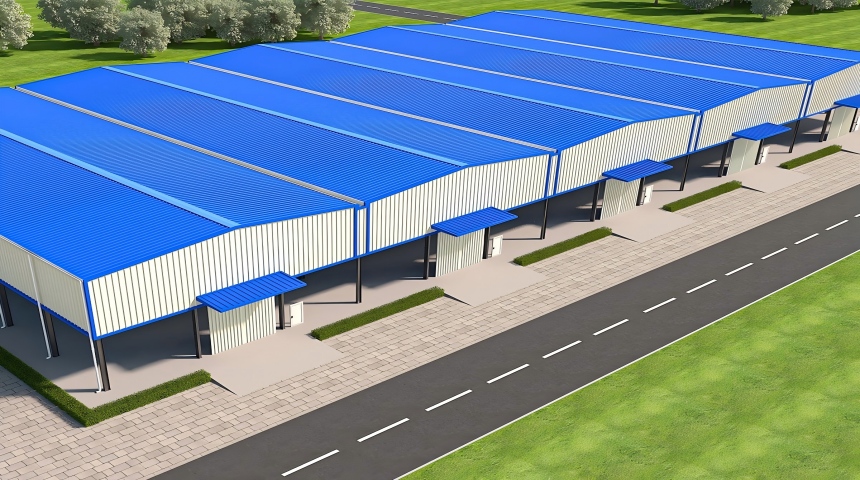
We strongly advise against falling into the "one grade fits all" trap. Different parts of a commercial facility bear entirely different types of physical stress. An efficient Industrial Steel Structure utilizes multiple tailored material specifications. You must assign the correct mechanical properties to the correct physical locations within the building.
Primary structural frames require exceptional yield strength and structural stiffness. They carry the main dead weight and live loads of the entire building. Engineers typically prioritize High-Strength Low-Alloy (HSLA) materials for these vital sections. Standard structural carbon steel also performs exceptionally well here depending on the span. For example, ASTM A500 works perfectly for hollow tubular structural sections. ASTM A36 remains a highly reliable choice for general wide-flange beams and standard I-beams.
Base plates serve a very specific transfer function. They push massive vertical loads down into the concrete foundation. Here, sheer tensile strength matters significantly less. Instead, you must prioritize plate thickness, core toughness, and high compressive strength. Thicker plates prevent localized buckling under immense downward pressure. They ensure the column does not punch through the foundation during heavy loading events.
Connections and bolts hold the entire structural skeleton together. Fasteners must prioritize high ductility above all other metrics. When extreme external stress hits the framework, connections need to stretch and bend. They must never snap under pressure. This ductile behavior actively prevents sudden, catastrophic brittle fractures. It gives facility managers vital visual warnings before any potential collapse occurs.
| Structural Component | Primary Stress Type | Key Material Priority | Typical Grade Choice |
|---|---|---|---|
| Main Columns & Beams | Bending & Axial Load | Yield Strength & Stiffness | HSLA, ASTM A992, A500 |
| Base Plates | Compression | Toughness & Thickness | ASTM A36, S275JR |
| Bolts & Fasteners | Shear & Tension | Ductility & Shear Strength | ASTM A325, A490 |
External geographic factors dictate mandatory steel properties. You must conduct a thorough, site-specific risk assessment. Environmental realities determine exactly which regulatory standard compliances your project must satisfy. Ignoring local climate data leads directly to structural degradation.
Sub-zero climates radically alter how structural steel behaves. Standard carbon steel becomes dangerously brittle in freezing winter temperatures. For buildings facing extreme cold, you must always specify impact-tested grades. Detail the absolute necessity of Charpy V-notch testing in your procurement documents. This specific mechanical test guarantees the material absorbs sudden impact energy without shattering like glass.
Active earthquake zones demand highly flexible, resilient buildings. Structural frames in seismic regions require exceptional energy-absorption rates. They undergo intense cyclic loading during tremors. Look closely at your regional grade designations. You should specifically select grades featuring Ductility (D) or Seismic (S) suffixes. These particular designations certify the steel can safely deform and withstand severe ground movements.
Coastal environments attack exposed steel relentlessly with salt-laden air. Highly corrosive chemical manufacturing facilities present similar degradation challenges. You must carefully evaluate the long-term return on investment for various corrosion protection methods. Weathering steel (often known as Corten) forms its own dense, protective rust layer over time. Alternatively, you can utilize standard carbon steel treated heavily with hot-dip galvanizing. High-performance industrial powder coatings also provide an excellent barrier against rapid oxidation.
Technical naming conventions often confuse buyers and delay procurement cycles. We need to translate these complex designations into highly actionable procurement data. Clear, standardized communication prevents costly purchasing errors and material rejections.
International construction projects require a deep understanding of global material standards. You must accurately map material equivalents across different regional boundaries.
ASTM (United States): Relies on broad performance categories like ASTM A36 for carbon steel and A992 for structural shapes.
EN (Europe): Uses an alphanumeric system starting with 'S' for structural steel, such as S275 and S355.
IS (India): Governs structural steel primarily through the IS 2062 standard, utilizing designations like E250 and E350.
For example, American ASTM A36 generally aligns closely with the European S275 grade. Knowing these precise equivalents greatly aids your international procurement teams.
Grade numbers typically denote the absolute minimum yield strength of the material. When you see a European designation like S355, it directly indicates a minimum yield strength of 355 MPa. However, the letters following the number matter just as much. Trailing letters usually indicate specific impact resistance testing temperatures. They can also represent specialized thermal treatments applied at the mill.
| EN Designation | Yield Strength (MPa) | Impact Test Temp | Typical Application |
|---|---|---|---|
| S275JR | 275 | Room Temp (20°C) | Standard indoor structural frames |
| S355J0 | 355 | 0°C | Outdoor structures, moderate climates |
| S355J2 | 355 | -20°C | Cold weather Industrial Steel Structure |
You should never purchase structural steel blindly. Always demand official Mill Test Certificates (MTCs) from your vendor. These certified documents verify the exact chemical composition of your specific steel batch. They confirm the precise percentage levels of Carbon, Manganese, and Silicon. Furthermore, MTCs validate the mechanical yield and tensile properties promised by the supplier before you transfer any funds.
Procurement and engineering misalignments destroy construction budgets. We see the same expensive errors repeated across the industry. Here is how you identify and avoid the most common material selection traps.
Mistake 1: Over-Specifying for the Application. Many conservative engineers default to the highest possible strength grade available. This cautious habit inflates raw material costs drastically. It also needlessly complicates standard welding procedures. You gain no tangible structural safety benefits by over-specifying beyond the mathematical load calculations. Stick precisely to the grade required by the structural analysis.
Mistake 2: Ignoring Weldability. High yield strength almost always requires higher carbon content. Selecting high-carbon steel ignores the harsh reality of the fabrication shop floor. These rigid materials require extensive, time-consuming pre-heating before welding. They demand highly specialized, American Welding Society (AWS) compliant labor. Ignoring material weldability leads directly to massive labor budget blowouts. Calculate the Carbon Equivalent Value (CEV) before approving any grade.
Mistake 3: Designing in a Vacuum. Engineers sometimes specify a niche material grade without ever consulting suppliers. Procurement teams then struggle desperately to source it locally. This disconnect results in forced, last-minute material substitutions under tight deadlines. These hasty swaps often compromise the original structural design integrity. You must always design your framework around local supply chain realities.
Choosing the right material grade requires profound pragmatism and cross-departmental communication. You must carefully balance strict mechanical load requirements against long-term environmental threats. Equally, you must respect local procurement realities to keep your construction timeline intact. Building an efficient Industrial Steel Structure depends entirely on this multifaceted material evaluation.
Base your final purchasing decisions on a proven, rigid shortlisting logic. Always secure structural engineer sign-off before making changes. Verify your chosen fabricator possesses the tooling capabilities for your requested grade. Demand absolute supplier transparency by requesting ISO 9001 certifications and verified Mill Test Certificates.
Take immediate action on your upcoming projects today. Audit your current project blueprints to ensure you have not over-specified materials. Consult directly with a certified steel fabricator regarding local warehouse availability. Finally, conduct a comprehensive lifecycle cost analysis to guarantee the long-term profitability of your facility.
A: HSLA (High-Strength Low-Alloy) contains trace elements like copper, nickel, or vanadium. These additions provide significantly higher strength-to-weight ratios and better atmospheric corrosion resistance than standard carbon steel. This superior strength often allows engineers to utilize lighter structural designs without sacrificing overall building safety.
A: Ductility allows structural steel to deform safely under extreme external stress, such as high winds or earthquakes. This bending action absorbs tremendous energy and gives visual warning signs before a potential collapse occurs. In contrast, rigid and brittle steel would snap suddenly without any warning.
A: Higher yield and higher carbon steel grades are inherently tougher to cut, drill, and weld. They rapidly wear down standard tooling. They also require specialized cutting machinery, slower machining speeds, and highly certified welders. These strict processing requirements substantially increase overall manufacturing and labor costs.
A: Yes, you can substitute grades, but only with formal structural engineer approval. The proposed substitute material must strictly match or exceed the original grade's yield strength, tensile strength, and weldability. It must do so without negatively altering the building's overall weight distribution and foundation loads.
